Key Takeaways
Late summer is the best time to buy a home, when listings are on the rise, inventory is fresher, and sellers are more willing to offer concessions.
The best time to buy varies by city and priority: whether you’re looking for fresh inventory, more selection, or the best deals.
Ultimately, the best time to buy a house is when it makes the most sense personally and financially.
The best time to buy a house depends on what matters most to you. Some buyers prioritize getting the best deal, while others want the largest selection of homes or the least competition. Everything from the time of year, to the local market, to economic strength can affect the purchase—and that’s before taking personal timelines into consideration.
Today’s housing market adds another layer to the equation. While affordability remains a challenge, buyers have more negotiating power than they’ve had in years. There are roughly 47% more sellers than buyers nationwide, and sellers are offering concessions at a record rate. For buyers who are financially ready, this is a great time to help you maximize those advantages.
Spring is commonly considered the best time to sell a house, but when is the best time to buy? We’ll break down the best times to buy in cities across the country, why timing varies by market, which data to keep an eye on, and how to decide when it makes sense for you to make a move.
From Redfin’s Chief Economist
“August is the prime time for homebuyers. Sellers are beginning to offer more concessions, inventory is still well stocked from spring, and there are still enough new listings to keep things fresh. But buying a house is local and personal, and different priorities produce different timelines. In general, the best time to buy is when you’re financially comfortable, have found the right home, and are ready to move.” – Daryl Fairweather, Redfin Chief Economist.
When is the best time to buy a house?
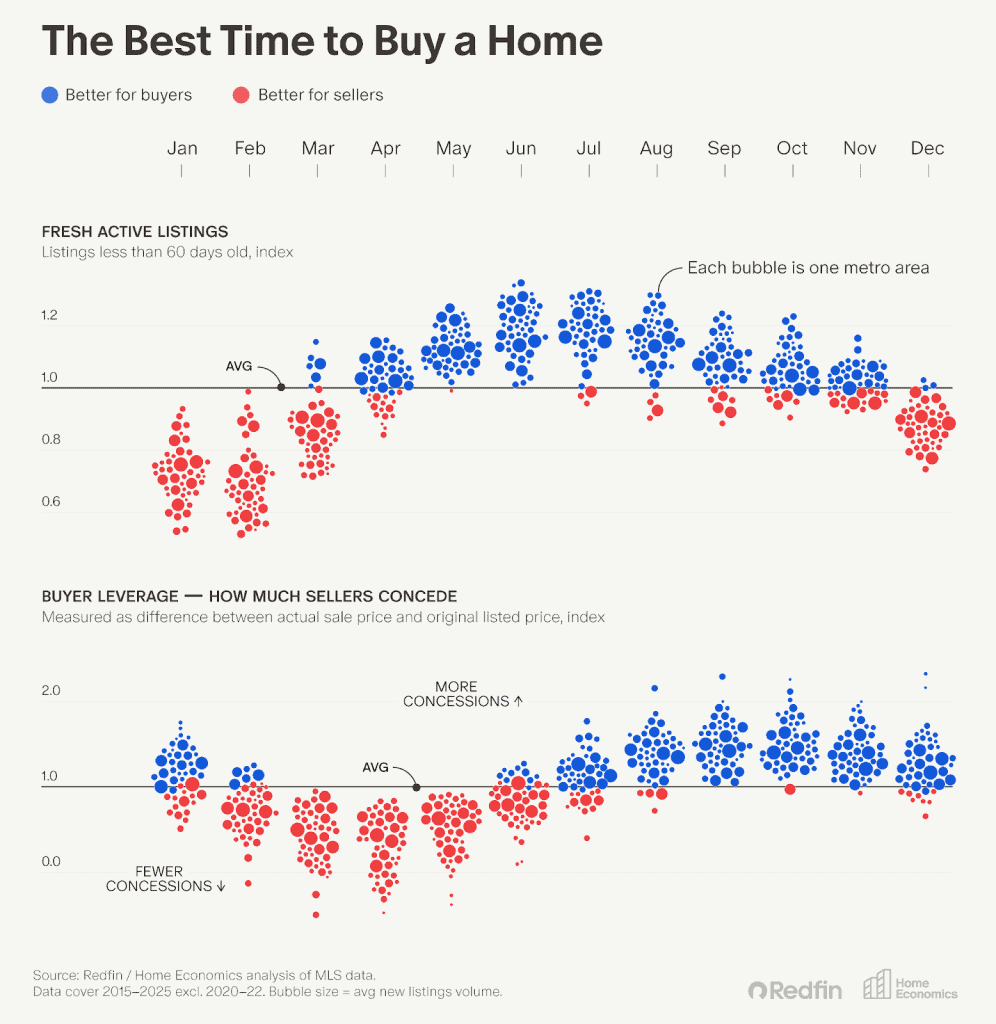
According to a Redfin and Home Economics report, the best time to buy a house is in late summer—specifically in August. Listings are fresher, inventory is higher, and homeowners are beginning to offer concessions as peak selling season fades.
But buying comes with tradeoffs, and finding the “best” time to put in an offer is complicated. For example, more inventory improves the chance of finding the perfect home, but more options might also lead to more competition, creating more urgency and requiring stronger offers to win a home.
To capture this tradeoff, Redfin’s analysis looked at the three key moments for homebuyers:
When new listings are rising
When Inventory is highest
When sellers are offering the largest discounts
Late summer is the period where those trends overlap most often. However, everything comes down to when it’s the best time for you—personal considerations like finances and moving timelines matter the most.
Buy in late spring for the most new listings
The flow of brand new listings typically peaks in late spring and continues through early summer. This is when buyers are most likely to find new homes for sale.
But with new listings also comes more competition. Spring is peak season for the housing market, so expect bidding wars for top properties.
Buy in mid-summer for the most inventory
Housing inventory tends to peak in mid-summer, as the last spring stragglers list their homes and less popular listings remain on the market. Buyers during this time typically have the largest selection of fresh homes to choose from.
Buy in early fall for the best deals
Price drops, discounts, and other seller concessions peak in early fall as they try to attract buyers before winter rolls around. Winter isn’t a great time for bargain hunters because by the time it rolls around, sellers are often more likely to wait for new buyers in spring than make concessions.
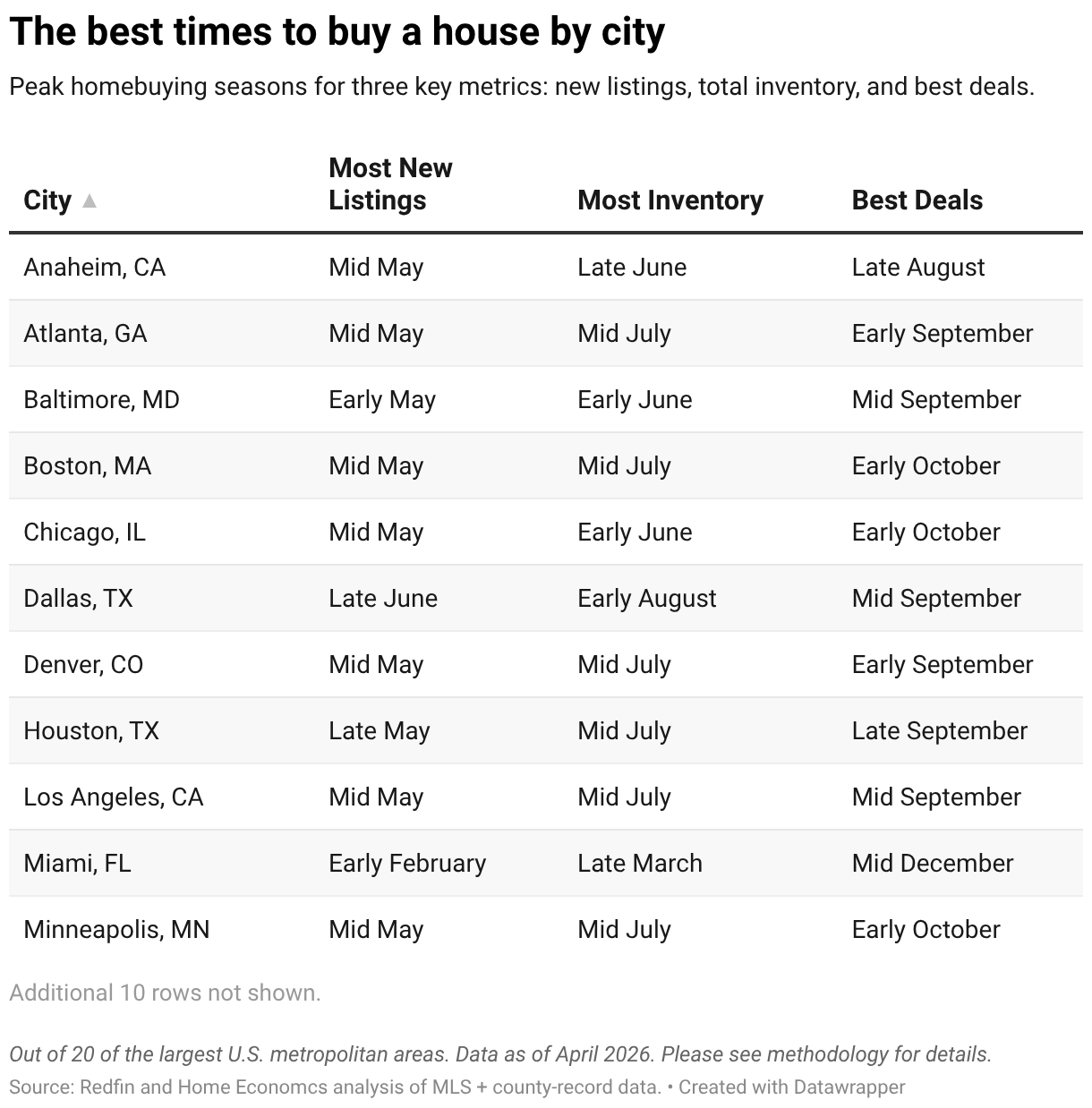
The best time to buy a house by city in 2026
While the best time to buy nationwide is in late summer, timing varies widely by city and what buyers value most. For example, in Atlanta, buyers looking for more inventory have the best chance in mid-July, while in San Francisco, inventory peaks in October.
Homebuying is seasonal, local, and highly individual—there isn’t a one-size-fits-all strategy that works everywhere for everyone. But data can still help inform your decision.
Here are the peak homebuying seasons in 2026 for cities across the U.S.
Why seasonality plays a role
The further south the city, the less “seasonal” its housing market is, meaning it doesn’t have as defined of “buying” and “selling” seasons. Markets with warm weather year-round tend to see more consistent inventory and demand throughout the year, while northern cities often experience more pronounced swings—peaking in the spring and slowing in the fall.
In Boston, for example, sellers are much more likely to give discounts in early fall; in Tampa, sellers aren’t as likely to give discounts until November. Talk with a real estate professional to understand your local market and when you can find the best deals.
How to get a better deal on a home
In today’s slow market, homebuyers often have leverage to negotiate with sellers for things like concessions and price reductions. There are a few markets in the Midwest and Northeast where sellers are in charge and demand is high, but generally, consumers are hampered by high costs and relatively limited inventory.
Here are some tips for homebuyers looking to get a better deal on a home in today’s market.
Negotiate for seller concessions: Ask the seller to cover closing costs, pay for repairs, lower their price, or buy down your mortgage rate.
Shop during periods of higher inventory: You’ll often have more homes to choose from in the spring, but demand may also climb. Check the Redfin Data Center to stay up to date on your local housing market dynamics.
Search for homes when demand is lower: Sellers are more likely to provide concessions following the busier spring and summer months. Once winter rolls around, though, most homeowners expect a slower market and aren’t as likely to budge.
Consider fixer-uppers and ‘sold as-is’ homes: These properties are often priced lower, but may require some elbow grease to get into livable shape. Work with a local real estate agent who understands neighborhood trends and can help you negotiate.
Work with a local agent: A local real estate agent will have in-depth knowledge of a neighborhood’s housing market and recent sales in the area, giving you a leg up when submitting an offer and negotiating. Plus, agents may have access to private listings you can’t find anywhere else.
Get pre-approved as soon as you can: Getting preapproved for a mortgage can help you set a budget, show sellers that you’re serious, and allow you to move faster when you find the right home.
>> Read: How to Find Affordable Houses
Should you wait for a better housing market?
Buyers have leverage in today’s housing market, but many are waiting for lower mortgage rates or home prices before making a move. Timing the market can be difficult, especially with today’s uncertain economy.
If mortgage rates fall significantly or inflation drops, more buyers may come off the sidelines, increasing competition and putting upward pressure on home prices—but also giving incentive for more sellers to list. Buyers who are financially ready today benefit from greater negotiating power, more seller concessions, and less competition than they would in a more active market.
“My best advice for cost-conscious buyers is to focus on the long term and buy when they’re personally and financially ready,” added Fairweather. “Housing is a major investment, and timing the market to score a discount is difficult and may not make sense for everyone. Housing is expensive, and while affordability is improving, it’s unlikely to substantially move until economic uncertainty eases and homebuilding improves. Don’t stretch your budget or rush the process if you don’t need to.”
Ultimately, the best time to buy isn’t necessarily when market conditions are perfect, but when you’re financially prepared, have found the right home, and are ready to move.
>> Read: Is Now a Good Time to Buy a House?
Final thoughts: The best time to buy a house is in late summer, but personal timelines matter the most
Buying a home remains challenging for most people. The typical housing payment has climbed to over $2,600, the median home costs nearly $400,000, and mortgage rates are volatile.
But buyers also have more leverage than they’ve had in years. Competition is low, inventory is growing, and sellers are increasingly offering price cuts and concessions to attract buyers.
For those still eager to find their dream home, late summer is the best time to buy a house: demand is stronger, inventory is building, and price cuts are more common. But ultimately, the best time to buy is when it works best for you.
Please see the original report for a full methodology.