
A 1901 mansion off the southeastern corner of Brower Park.
Photo: Brooklyn Blocks Real Estate
In a neighborhood of stately prewar apartments and brownstones, 1094 Park Place manages to stick out. There’s a three-story turret, a front porch the size of some one-bedrooms, and a private driveway (with a porte cochere, no less). Wave-shaped dormer windows overlook the Spanish-tile roof. Inside, there’s parquet for miles, wood paneling, stained glass, beamed ceilings, and a classical frieze of men in togas. Out back, there’s a pergola and a small pond. “They don’t build them like that anymore,” says broker Joe Brikman, who listed the building last week for the first time in 15 years at $3.995 million and struggled to find comps. “There are no comparisons.”
Built at the twilight of the Gilded Age, No. 1094 was carved from an estate that was once even grander — the family seat of George V. Brower, a lawyer at the turn of the 20th century who went on to become Parks commissioner for two terms under Alfred Chapin and Robert Van Wyck. Brower used his public job to create a park that “happened to be across the street,” per historian Suzanne Spellen, who dug into the building’s history for Brownstoner. The estate was big enough to hold a skating pond and certainly big enough to carve out a lot next door to the main house for his daughter, Genevieve. Plans for what would become No. 1094 were filed in 1901, and the couple hired the architect Henry B. Moore, now best known for another showy Brooklyn home — the Gale Mansion in Prospect Park South. If the couple wanted to make an impact, that may have had something to do with the groom’s profession: C. M. Phipps ran a factory producing jaunty ladies’ hats, “sold by the most exclusive milliners of London, Paris, Berlin, Vienna, etc.,” according to marketing copy.
The young couple seems to have followed the trends from what would become Crown Heights; Spellen found they lived here only a few years. After George Brower’s death in 1921, his home was razed to make way for a synagogue next door as a New Wave of wealthy German Jewish émigrés moved into the neighborhood. In 1945, the house was sold to Melvin Mason, a Howard-trained doctor who put his practice on the ground floor. (Many of the neighborhood’s other grand mansions were chopped into smaller units or left derelict, a result of racist redlining that made it almost impossible o get mortgages in Black neighborhoods.) When Mason wasn’t working, he was entertaining distinguished guests. (One, the prime minister of Jamaica, reportedly gave the family the tropical stained-glass scene that hangs over the fireplace in the foyer.)
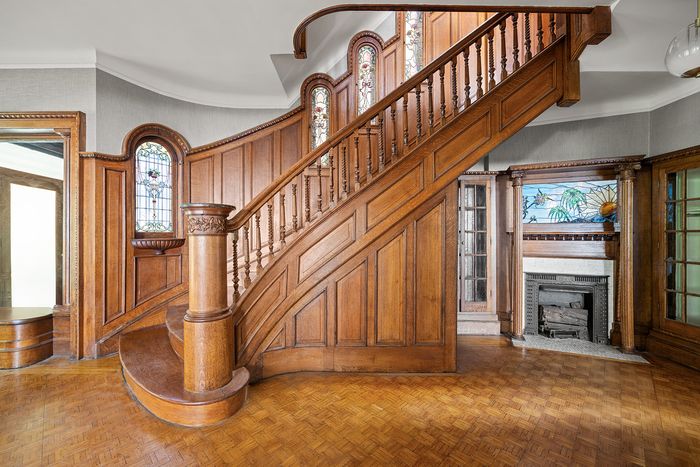
The fireplace with stained glass showing palm trees.
Photo: Brooklyn Blocks Real Estate
The family sold the house in 2001 to Ann L. Jacobs, who sold it eight years later for $960,000. That owner, Sholom D. Nagel, raised a family here and took on a series of renovations, according to Brikman, the Nagels’ broker. (The kitchens and bathrooms certainly don’t look 1901.) Brikman says the family has moved out of the borough and tried listing the home last summer as a $13,950 rental. This year, Brikman says, the Nagels changed their minds. But, Brikman adds, “they’re not happy to get rid of it.”
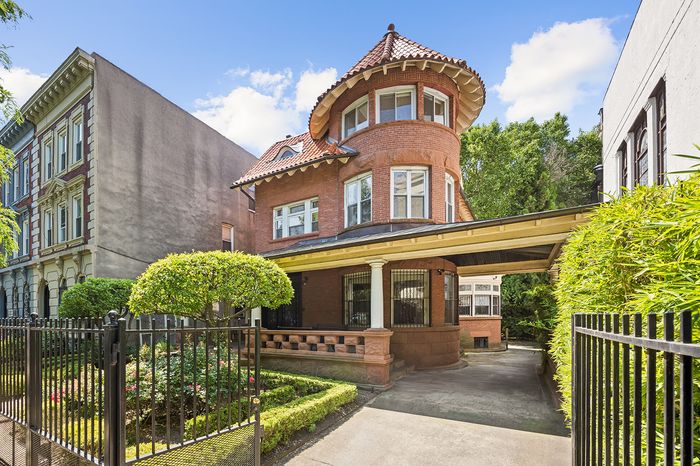
A rare private drive sweeps under the porte cochere, where steps lead to the covered porch and the main entrance. The drive leads back into a deep yard.
Photo: Brooklyn Blocks Real Estate
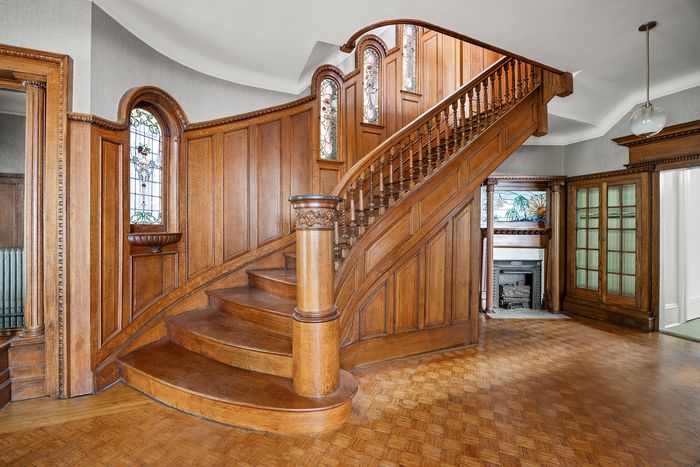
The formal entry to the foyer. Left is a window to the sideyard. The open door to the right leads toward the back of the house, past a formal dining room and into a breakfast room and a kitchen off the garden.
Photo: Brooklyn Blocks Real Estate
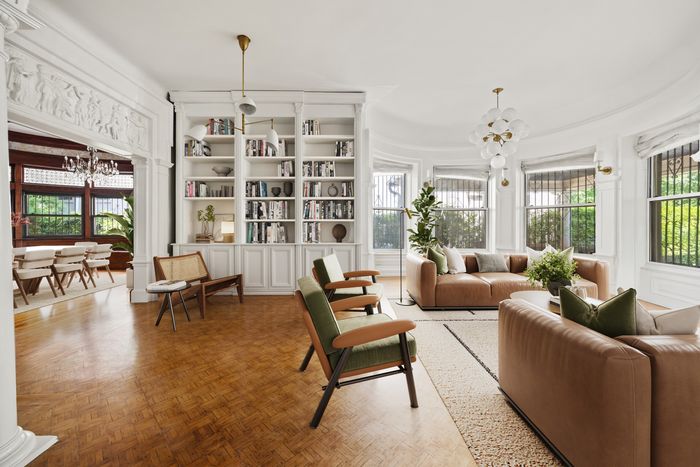
Facing the foyer is an open living area that sits toward the front of the house, occupying the curve of the turret. A frieze above the doorway (left) appears original.
Photo: Brooklyn Blocks Real Estate
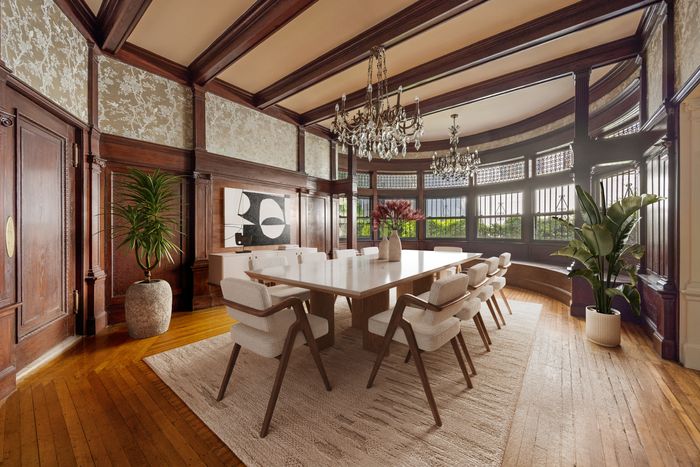
The formal dining room.
Photo: Brooklyn Blocks Real Estate
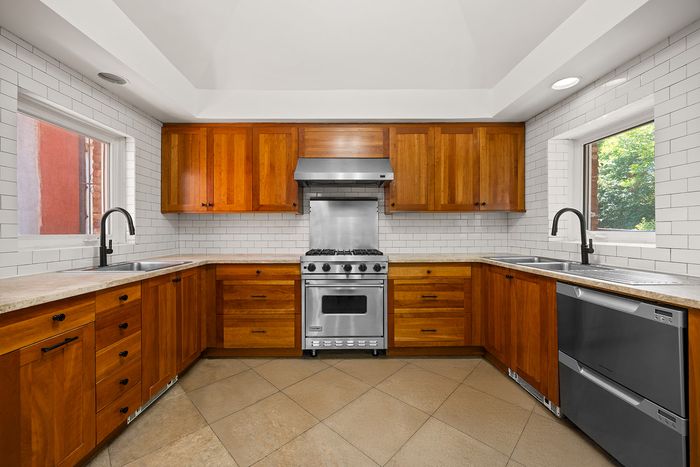
The kitchen has been renovated. Elements of the images may be virtually staged.
Photo: Brooklyn Blocks Real Estate
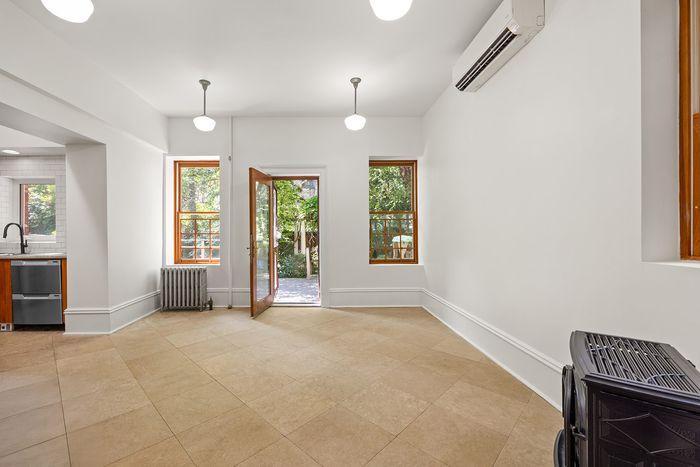
A 12-by-12-foot breakfast room off the kitchen (left) leads to a backyard deck.
Photo: Brooklyn Blocks Real Estate
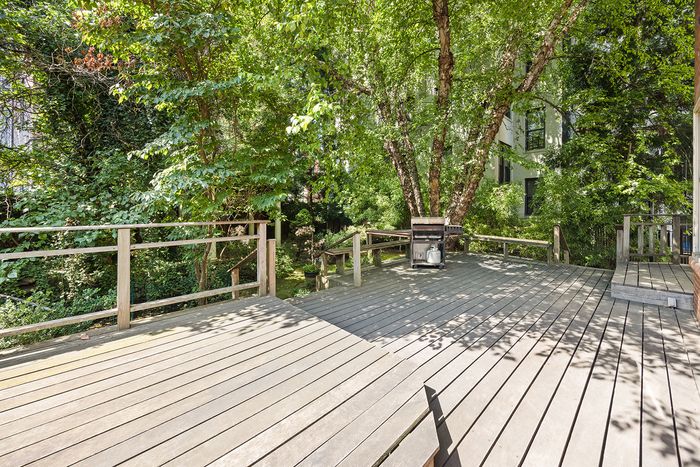
The deck is 25 feet wide and 11 feet deep and overlooks the rear yard.
Photo: Brooklyn Blocks Real Estate
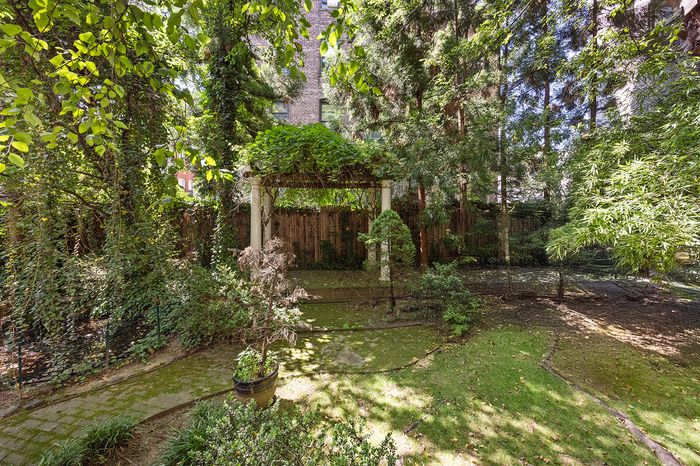
The yard holds a pond (left) and a pergola.
Photo: Brooklyn Blocks Real Estate
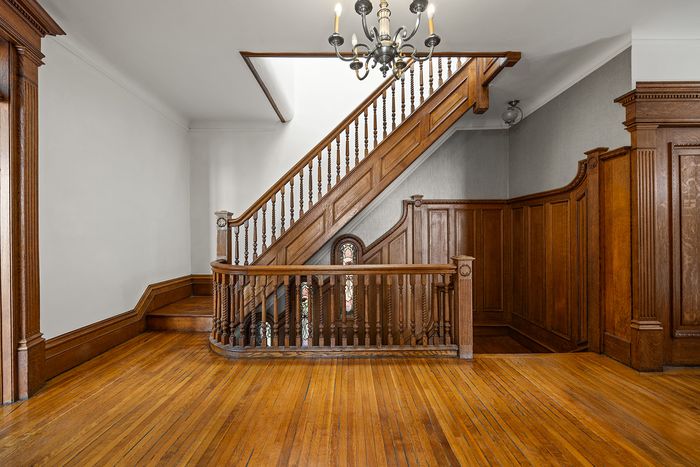
The main stairs lead to a landing on the second floor that opens onto three bedrooms.
Photo: Brooklyn Blocks Real Estate
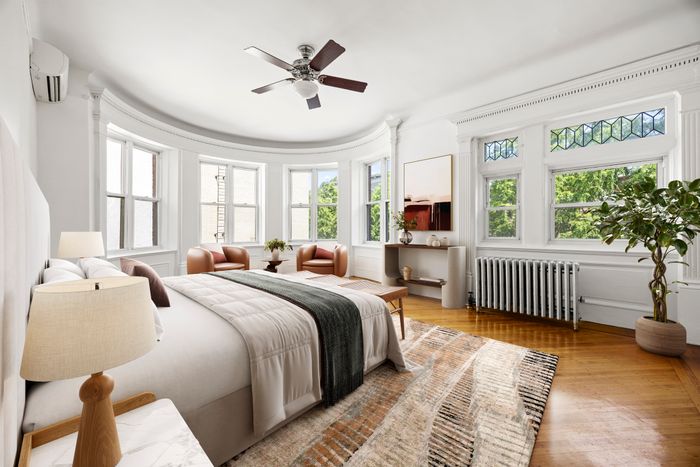
The largest of three bedrooms on the second floor.
Photo: Brooklyn Blocks Real Estate
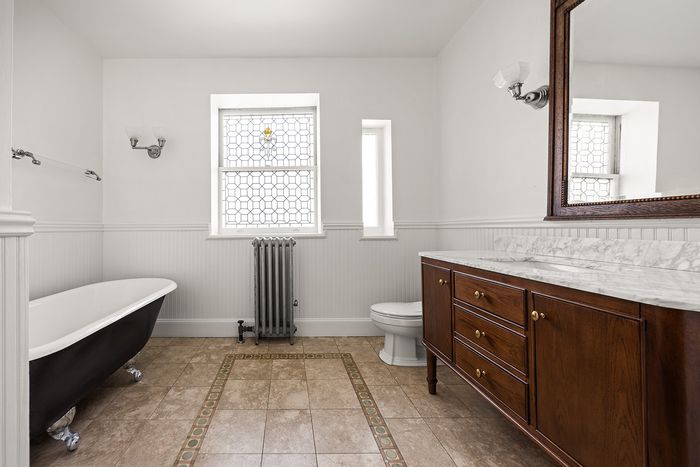
A bathroom on the second floor.
Photo: Brooklyn Blocks Real Estate
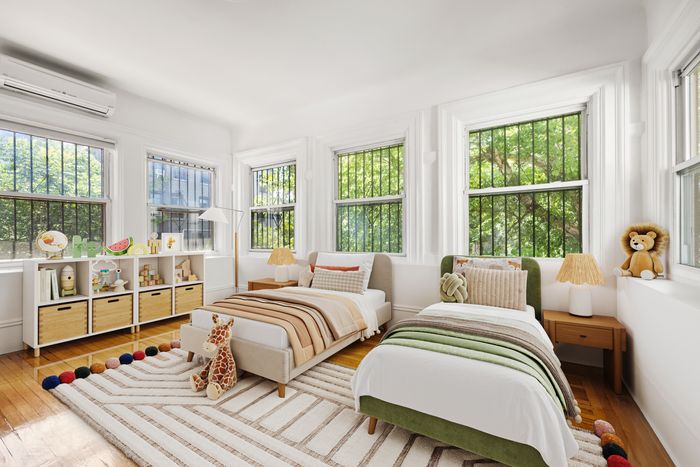
The rear bedroom on the second floor has views of the garden.
Photo: Brooklyn Blocks Real Estate
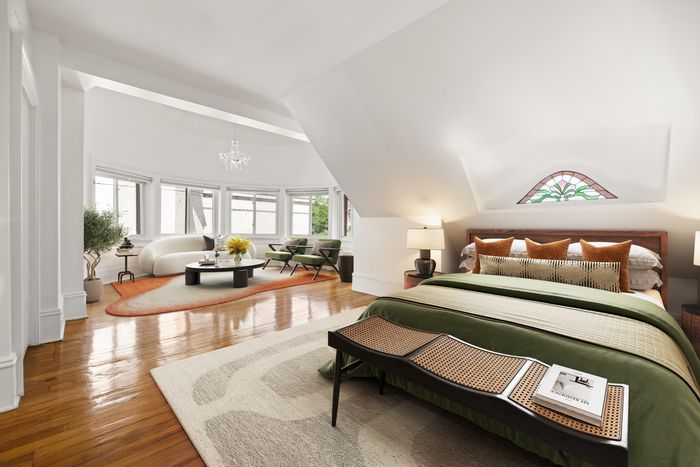
The third floor is shown as one immense primary suite with a walk-in closet with a dressing room (not pictured).
Photo: Brooklyn Blocks Real Estate
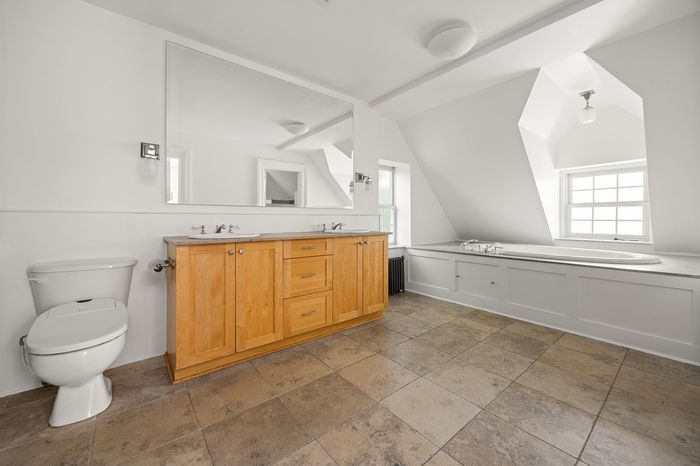
The primary suite on the top floor has an oversize bath.
Photo: Brooklyn Blocks Real Estate
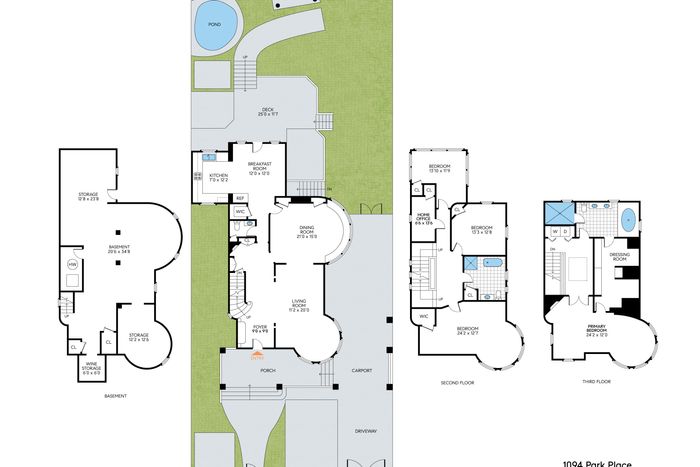
Photo: Brooklyn Blocks Real Estate
Sign Up for the Curbed Newsletter
A daily mix of stories about cities, city life, and our always evolving neighborhoods and skylines.
Vox Media, LLC Terms and Privacy Notice