


The formal dining room in 11D.
Photo: Jesse Armas
Everet Goldberg preferred working with what he called artisans when it came to renovating his apartment. After buying a classic six on West End Avenue in 1996, he brought in a trompe l’oeil painter to add faux bois to the metal of an oven vent so it would blend into the oak cabinets. A stained-glass specialist came by to restore a pattern of red tulips on mottled glass windows from 1912. An octogenarian plumber restored fixtures that dated back to his own childhood. Goldberg was obsessive about using original materials, apparently bragging to neighbors about outbidding Martha Stewart on a set of tiles at auction. The renovation was meticulous. And seemingly endless. “In later years I came to the conclusion that he would never move in,” a neighbor told me.

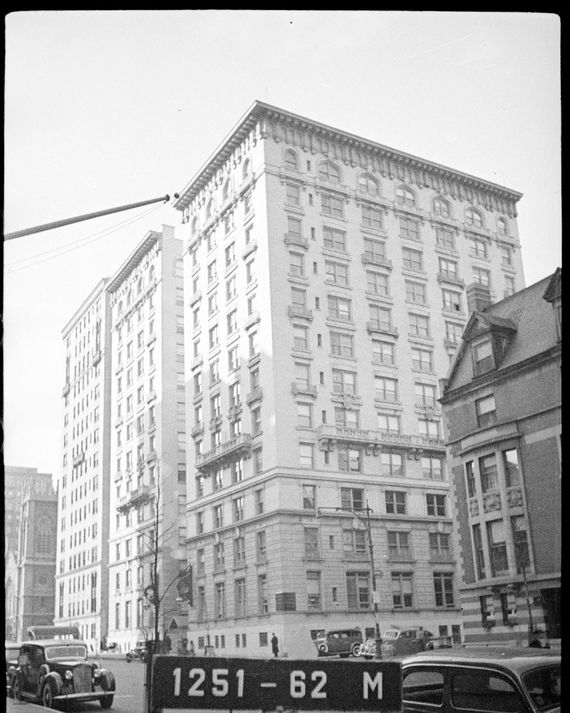
645 West End Avenue was designed by Gaetan Ajello, a Sicilian whose work was praised in his lifetime but who may now be best known for hiring Rosario Candela.
Photo: Tax Department photographs/Courtesy of the Municipal Archives/City of New York
He never did. On a cold morning this February, Goldberg was found dead on the roof of an apartment building on Avenue H in Flatbush, about an hour’s ride away from 645 West End. He was 81. The New York Post called his death a “fatal fall,” and neighbors blamed building management — the elevators were often out of service, and residents would take the elevator in another wing of the complex, cross the roof, and walk down to their apartments. It appears that was what Goldberg was doing: He had groceries with him when he fell, and the roof was icy from a storm that had recently dumped nine inches across the city.
Goldberg’s building on Avenue H was just about the opposite of No. 645: A no-frills 1950 brick complex all the way at the other end of the 2 train that packed 360 units across six towers. There was no doorman and no stained glass, and the radiator in the two-bedroom that Goldberg rented for $1,200 was peeling paint. After Goldberg’s death, a friend, Henry Gifford, reluctantly stepped in to the role of executor and found the place in ramshackle condition. “The most common object was a shopping bag with the glass part of a light fixture that he found on the street, laid down, and never picked up again,” he said.
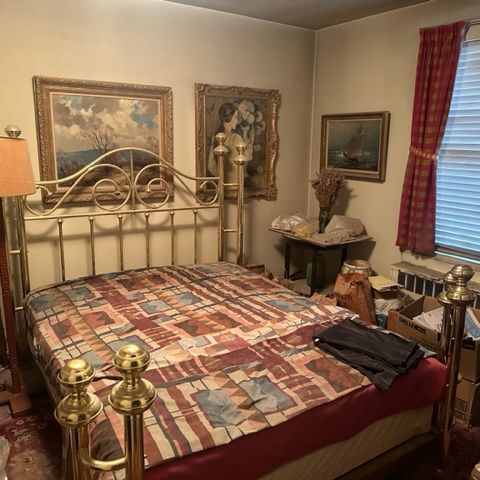

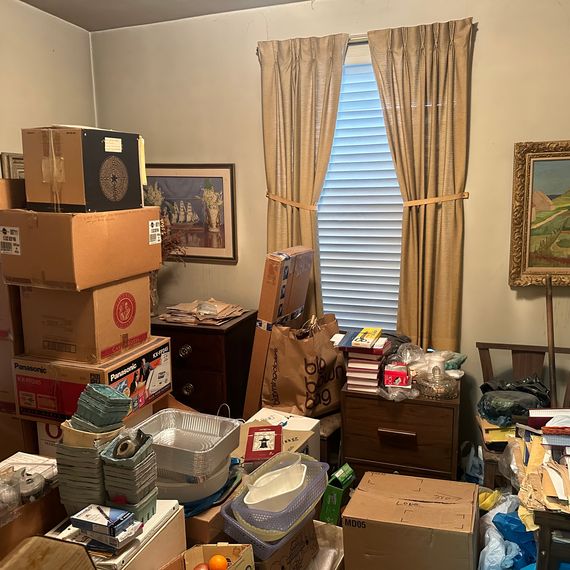
Goldberg’s apartment on Avenue H after his death. Henry Gifford.
Goldberg’s apartment on Avenue H after his death. Henry Gifford.
Goldberg and Gifford met over the phone in 1987. Gifford was a landlord with a few buildings for sale, and Goldberg was a real-estate broker who called up after seeing the ad. They were both realists or cynics, depending on who was asking, and bonded as native New Yorkers with difficult childhoods. Gifford, who never attended college, eventually sold those buildings and became the city’s foremost expert on the repair and maintenance of boilers, writing a 571-page textbook on building science. Goldberg, meanwhile, left real estate and bought a cleaning business that he rebranded as a high-end service. His gimmick was hiring artists to do the cleaning, which brought in new clients every time the press fawned over the poor Cindarellas. The New York Times wrote about one of Goldberg’s dancers “cleaning the floor in deep arabesques,” a singer making his opera debut in La Boheme between scrubbing toilets. Artists, Goldberg liked to tell reporters, “pay attention to detail.”
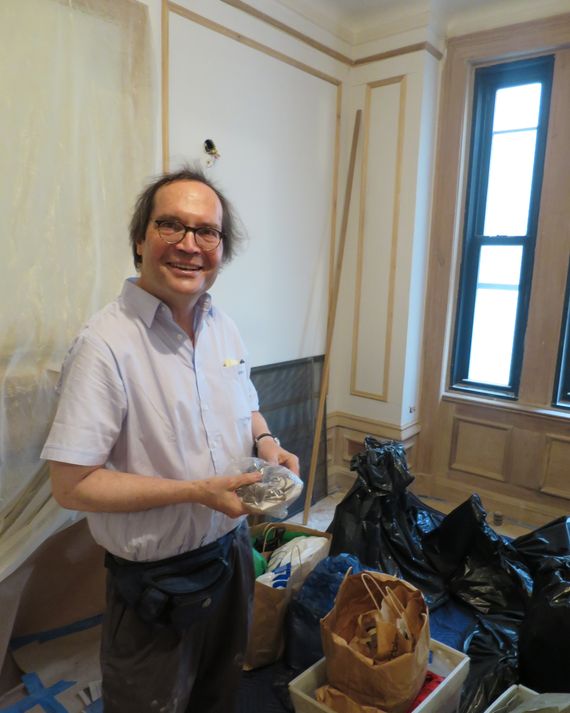
Goldberg in the apartment.
Photo: Henry Gifford
So did Goldberg, who told Gifford he wanted his help finding a prewar apartment in perfect untouched condition. Gifford spent two years scouting before he came across 11D, which had original floors, panels, and tile — the product of 80 years of renters (and landlords) who never bothered to renovate. Goldberg loved it.
A wide front hall leads to French doors that open into a dining room, which then opens into a living room with a fireplace. On the other side of the dining room, a swinging door leads to a kitchen with glass-front cabinets and a door to a maid’s room with another bathroom. At the other end of the apartment, looking over West End Avenue, are two bedrooms: a primary with an en suite bathroom with a shower and a second, larger bedroom on a hall with a larger bath accessible to guests. Goldberg, who was around 52 when he bought it, told Gifford he imagined raising children there. Gifford told him to move in quickly so they could retire into an easy life as “the two schmucks in the diner.”

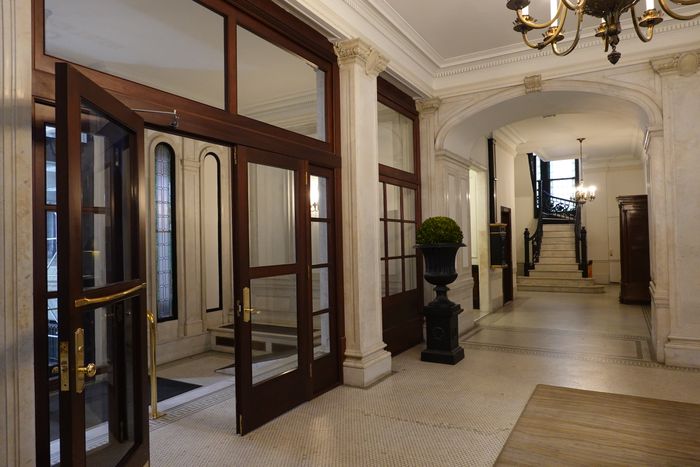
The lobby at 645 West End Avenue. Eric T. Schneiderman lived here while serving as the state attorney general, and Morgan Freeman was here when he was nominated for an Oscar for Driving Miss Daisy.
Photo: Adriane Quinlan
Instead, Goldberg became a decadeslong source of building intrigue, arriving about once a month, often with a contractor in tow. Neighbors would sometimes ask the super, Luis Nunez, if Goldberg was finished with his renovation. “It was just a known thing,” said Nunez. The doorman, Bruce, would sometimes chat with Goldberg at the door, learning about his quest for some missing original piece. “He was a nice guy,” said Bruce. “Very friendly.”
The artisans who worked for him had a different perspective. “He seemed to be very, let’s say, anal about having things meticulous,” said Peter Freedman, the stained-glass specialist, whose clients usually ask for a quote, talk logistics, and then leave him to his work. Goldberg, on the other hand, hounded Freedman with questions, asking about every material used in every step of the process. This was so unusual that he remembered him clearly over 25 years later. “I guess you call people like that characters,” Freedman said.
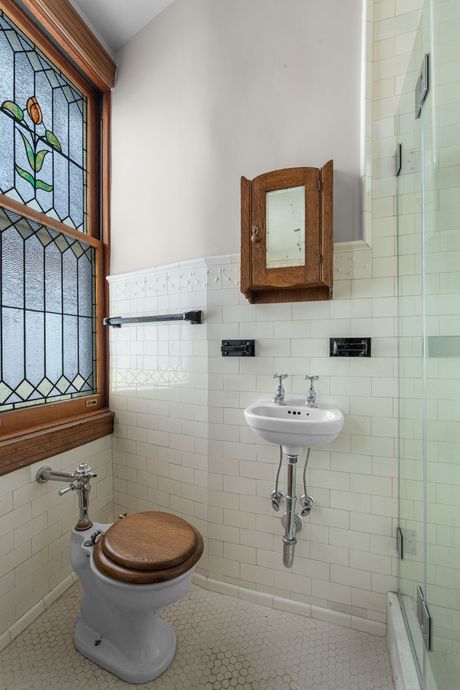

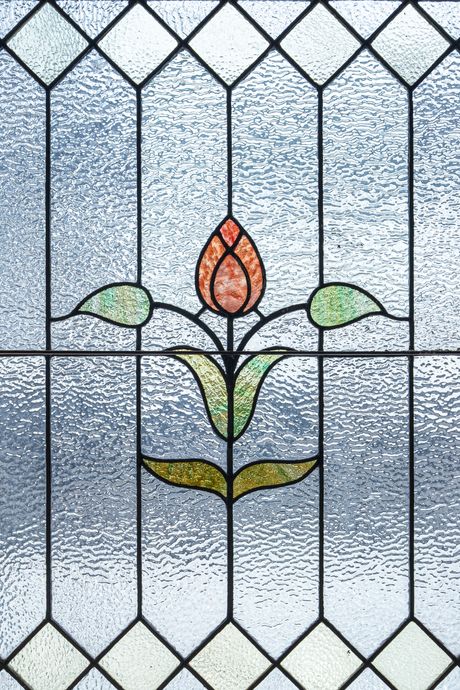
Peter Freedman restored stained-glass windows in three bathrooms. Jesse Armas.
Peter Freedman restored stained-glass windows in three bathrooms. Jesse Armas.
As to why Goldberg fixated on finding a prewar classic six of his own, Gifford could only guess. He assumed it was the opposite of how Goldberg had been raised: far more modestly, in Brooklyn, by parents who both died before he graduated high school. There were no siblings. As an adult, Goldberg seemed to flinch at any opportunity for pleasure. He rarely ate out and was never known to take a vacation — a passport book discovered after his death showed no stamps. Gifford wondered if he liked the apartment on West End Avenue as a way to travel back in time, at least aesthetically, to before the wars rattled his father, a Jew who made it out of Poland. Everyone I talked to seemed to have a theory. “Maybe he didn’t know how to move in, or how to stop renovating,” Goldberg’s neighbor James Sparks told me. “People procrastinate when something stresses them out, or when they don’t quite know how to do something.”
In early June, I visited Goldberg’s masterpiece. I took an elevator empaneled with faux mahogany to the 11th floor and followed Gifford into the clean brightness of 11D. It smelled like wood shavings and plaster. Gifford was preparing to sell it, with the cash benefiting 25 Jewish charities that Goldberg had named as beneficiaries. In a bedroom, Gifford pointed to the handle of a closet door, a brass-and-glass antique. There was a key in it, a detail I might have overlooked if Gifford hadn’t pointed it out. “That’s obviously old,” he said before giving it a turn. “Look,” he said, amused. “It works.”
This piece has been updated.
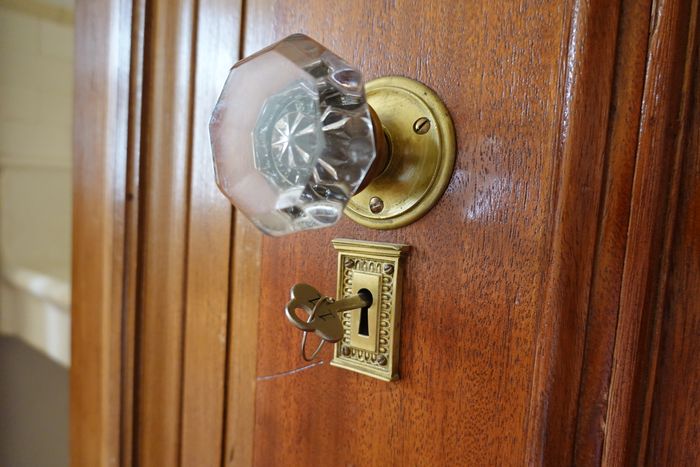
Keys that lock are in every closet and bedroom door in the apartment.
Photo: Adriane Quinlan
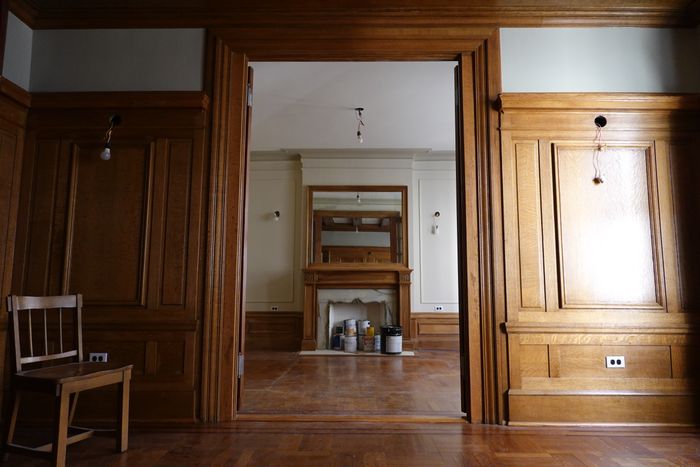
At the time of Goldberg’s death, the apartment had been entirely rewired, but light fixtures had not been installed.
Photo: Adriane Quinlan
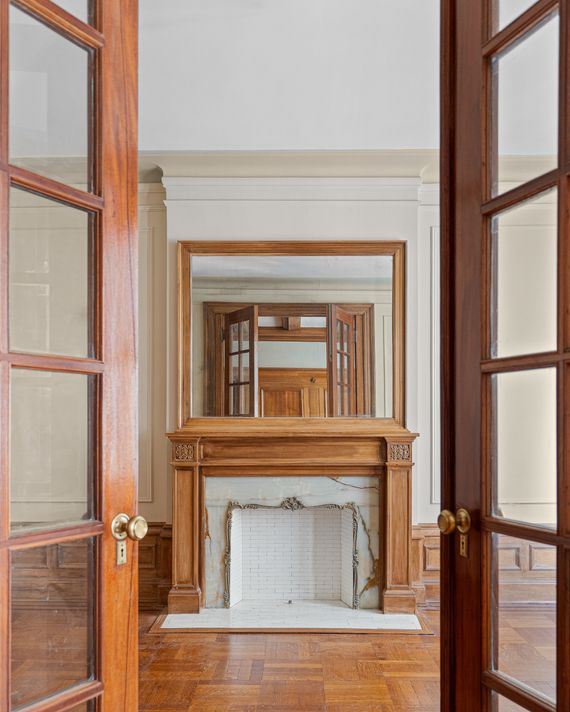
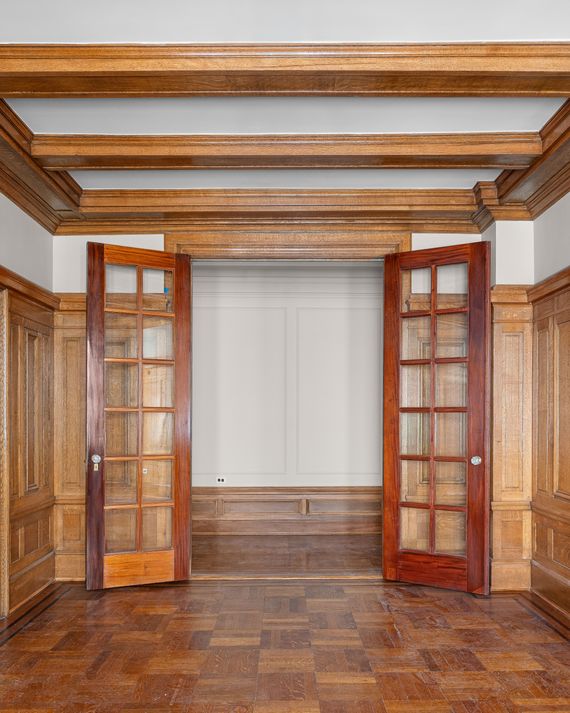
Goldberg restored French doors on either side of a dining room, which frame a view of the living-room fireplace. Jesse Aramas.
Goldberg restored French doors on either side of a dining room, which frame a view of the living-room fireplace. Jesse Aramas.
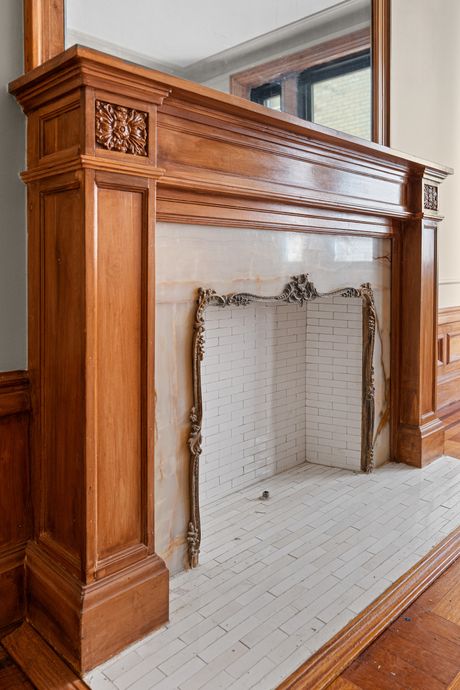
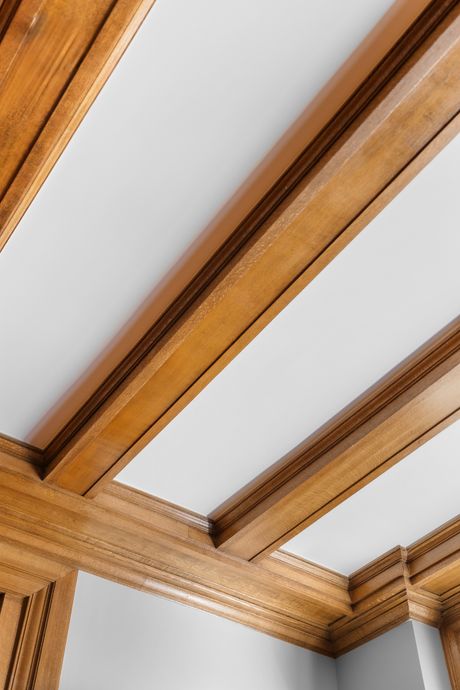
A detail of the fireplace and the ceiling beams in the dining room. Jesse Aramas.
A detail of the fireplace and the ceiling beams in the dining room. Jesse Aramas.
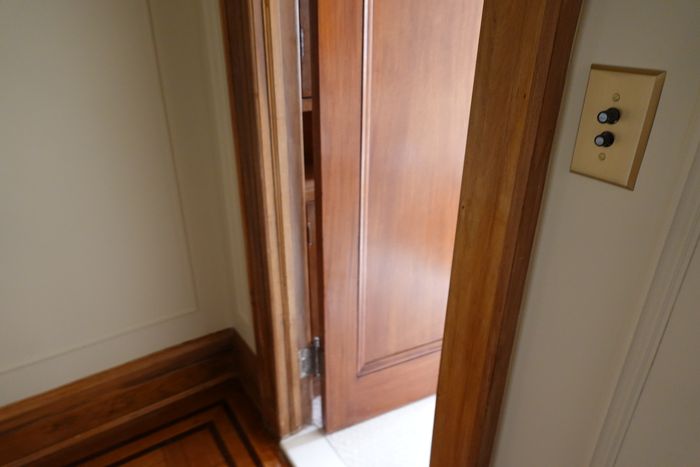
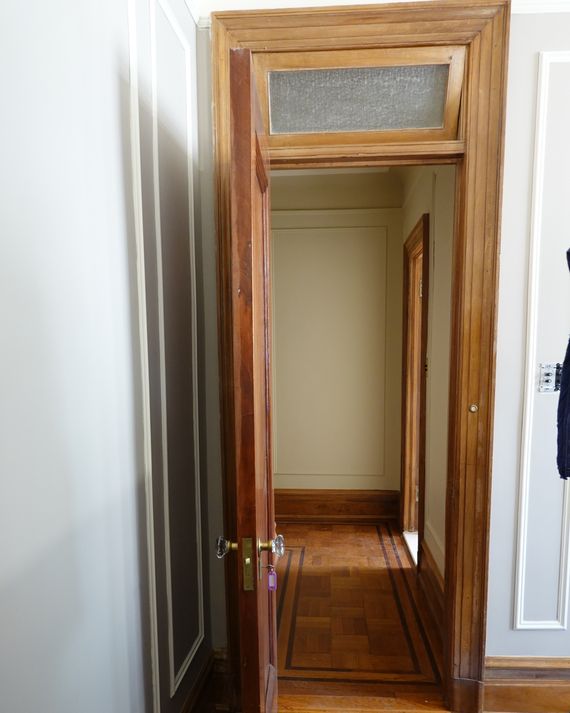
Goldberg made the unusual decision to restore transom windows and two-button light switches, turning one button into a dimmer switch. Adriane Quinlan.
Goldberg made the unusual decision to restore transom windows and two-button light switches, turning one button into a dimmer switch. Adriane Quinlan.
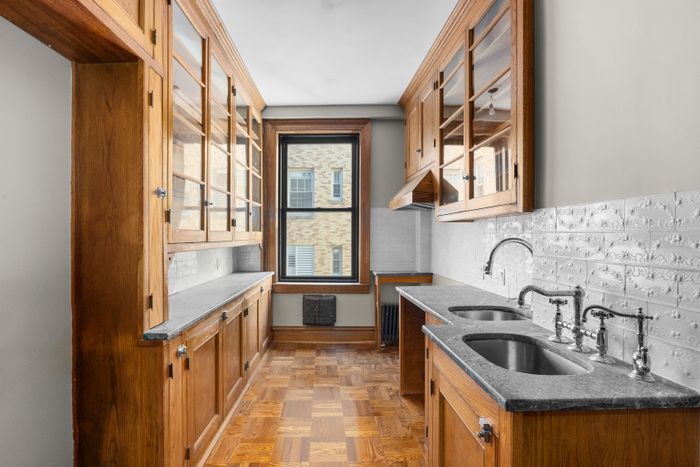
On the other side of the dining area is the kitchen with tiles that Martha Stewart might be angling for.
Photo: Jesse Armas
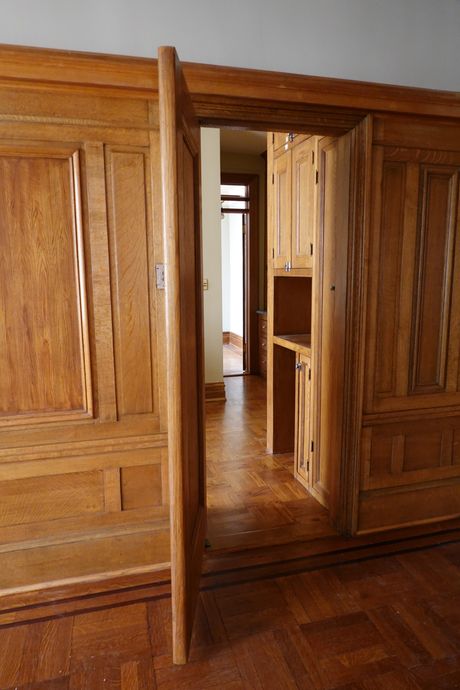
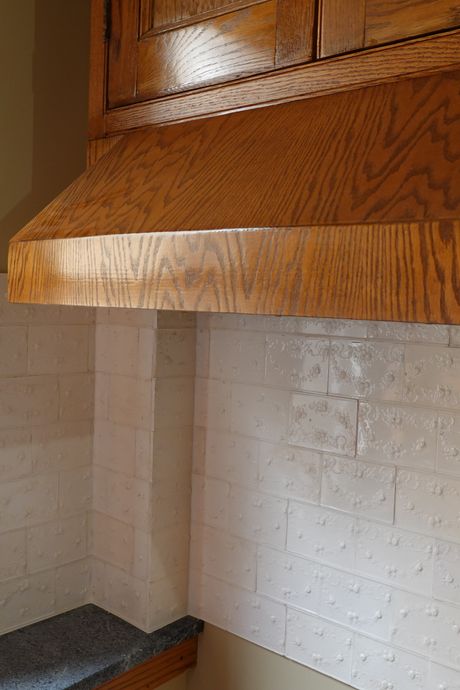
A swing door to the kitchen and a detail of the faux-bois oven vent. Adriane Quinlan.
A swing door to the kitchen and a detail of the faux-bois oven vent. Adriane Quinlan.
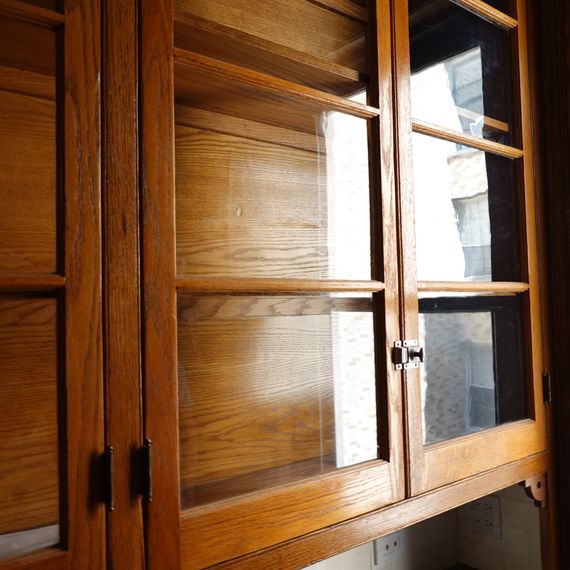
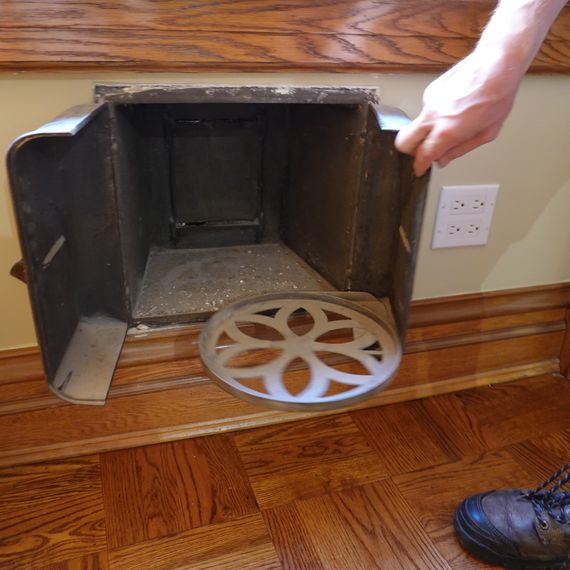
Old glass in the kitchen cabinets and a restored cold pantry. Adriane Quinlan.
Old glass in the kitchen cabinets and a restored cold pantry. Adriane Quinlan.
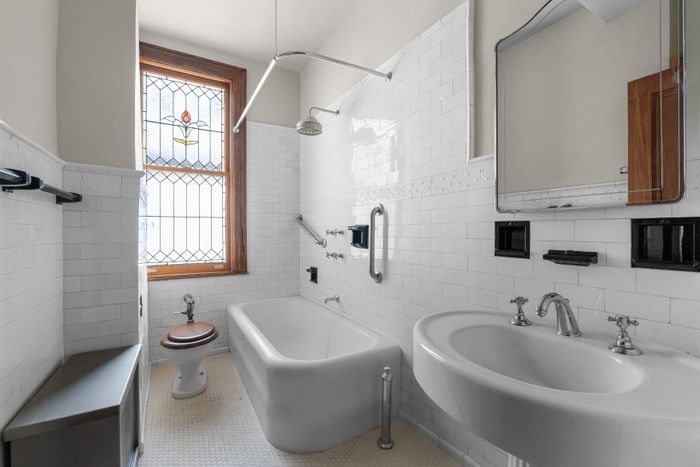
Bathrooms were restored with antique fixtures and tile.
Photo: Jesse Armas
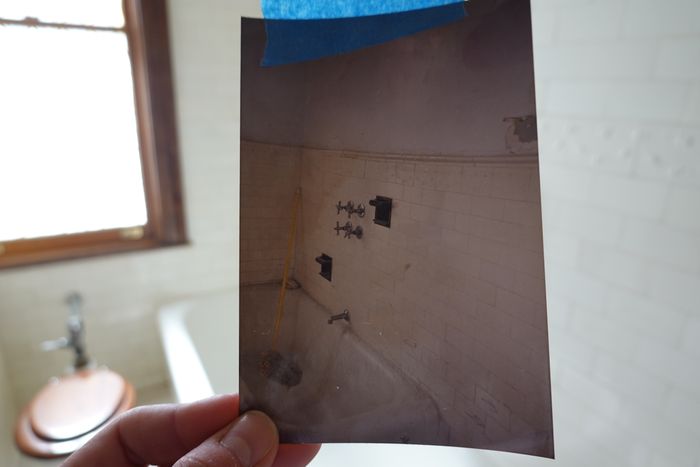
An image from before the restoration. The building was a rental from 1912 to 1984, when it became a co-op.
Photo: Adriane Quinlan
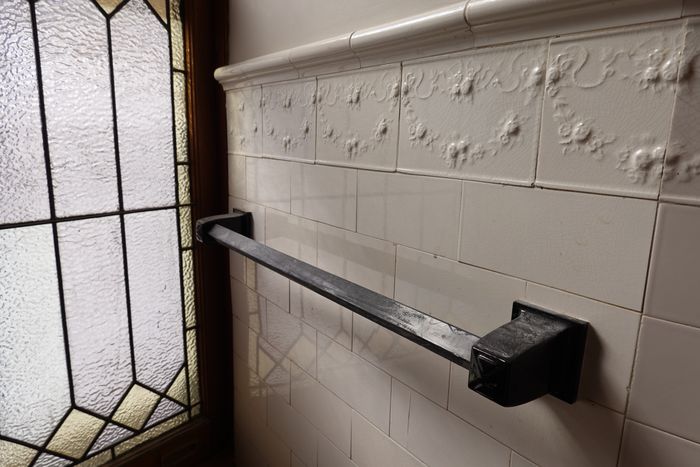
Bathroom tiles include a floral relief.
Photo: Adriane Quinlan
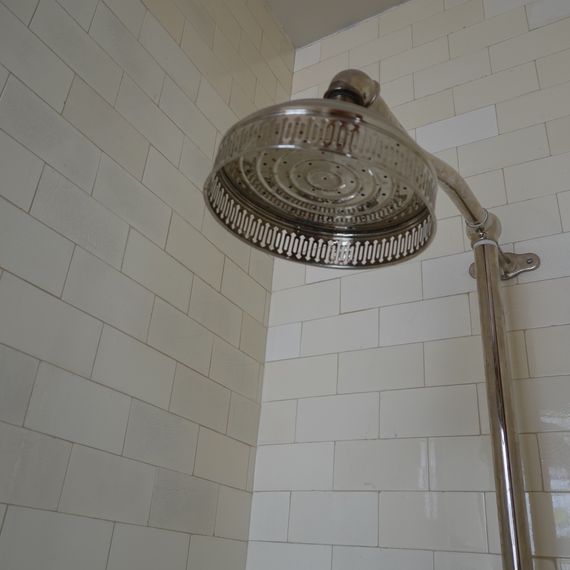
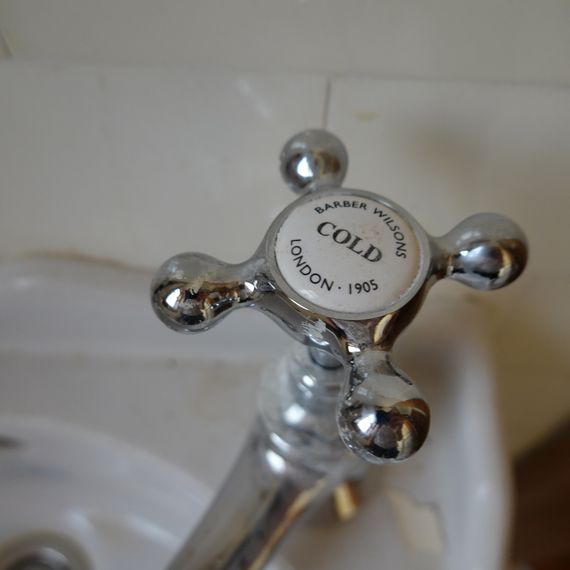
Antique fixtures are in all three bathrooms. Adriane Quinlan.
Antique fixtures are in all three bathrooms. Adriane Quinlan.
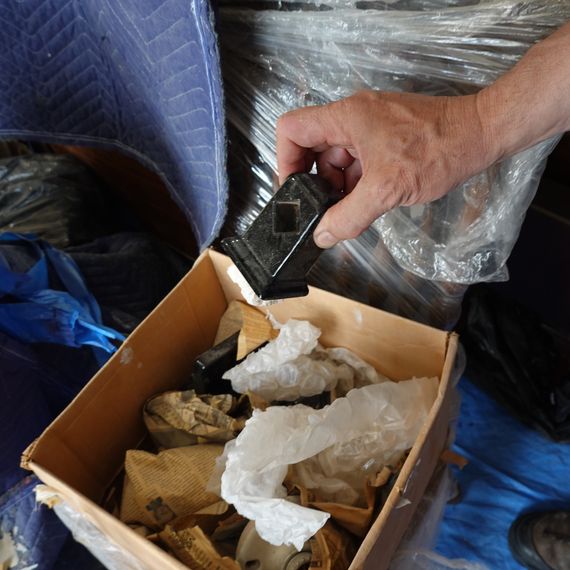
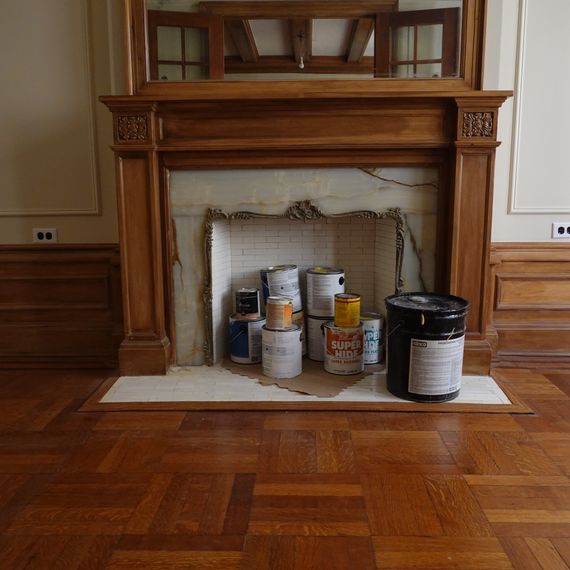
Goldberg bought old fixtures from the building handyman and kept every stain and paint used in the space. Adriane Quinlan.
Goldberg bought old fixtures from the building handyman and kept every stain and paint used in the space. Adriane Quinlan.
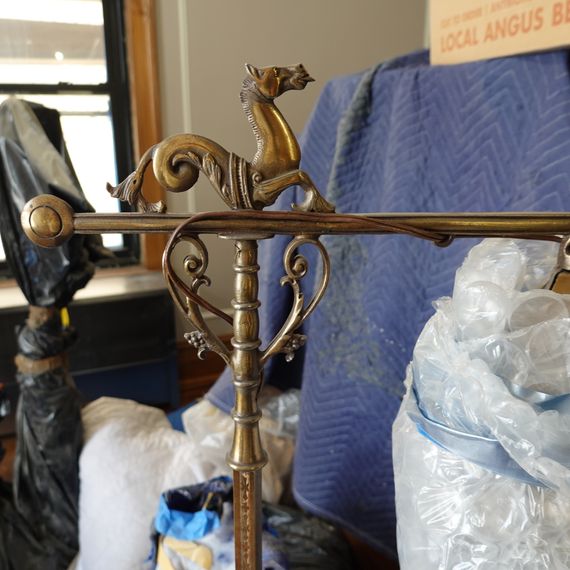
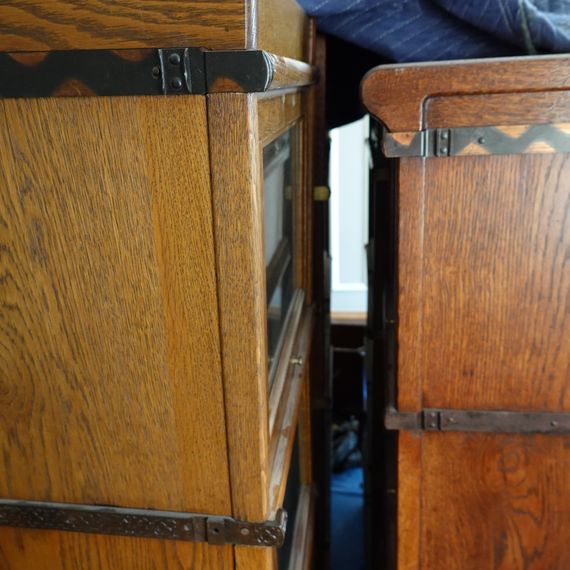
He also kept antique furniture that he may have bought to someday live with, including a brass light fixture with a tiny horse and glass-front barrister bookcases. Adriane Quinlan.
He also kept antique furniture that he may have bought to someday live with, including a brass light fixture with a tiny horse and glass-front barrist… more
He also kept antique furniture that he may have bought to someday live with, including a brass light fixture with a tiny horse and glass-front barrister bookcases. Adriane Quinlan.
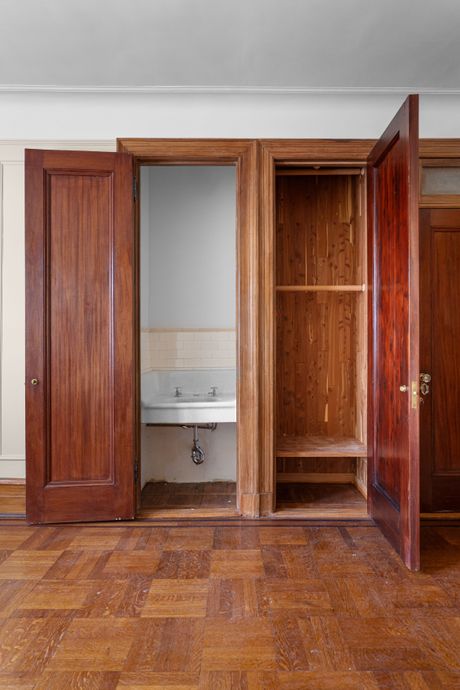
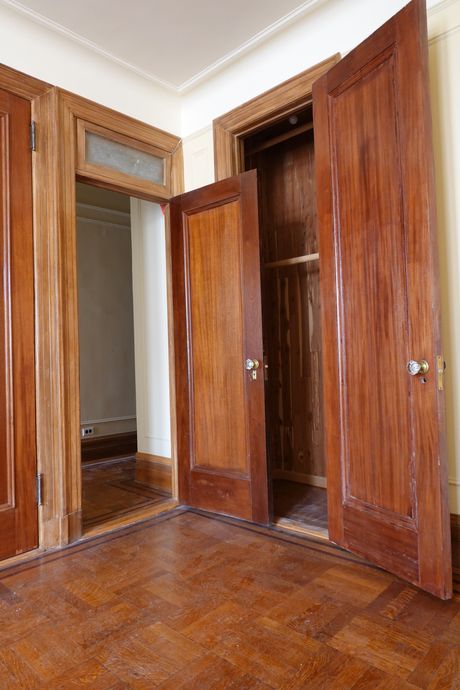
Goldberg restored a shaving sink in the primary bedroom. All five closets in the apartment are lined in cedar. From left: Photo: Jesse ArmasPhoto: Adriane Quinlan
Goldberg restored a shaving sink in the primary bedroom. All five closets in the apartment are lined in cedar. From top: Photo: Jesse ArmasPhoto: Adri… more
Goldberg restored a shaving sink in the primary bedroom. All five closets in the apartment are lined in cedar. From top: Photo: Jesse ArmasPhoto: Adriane Quinlan
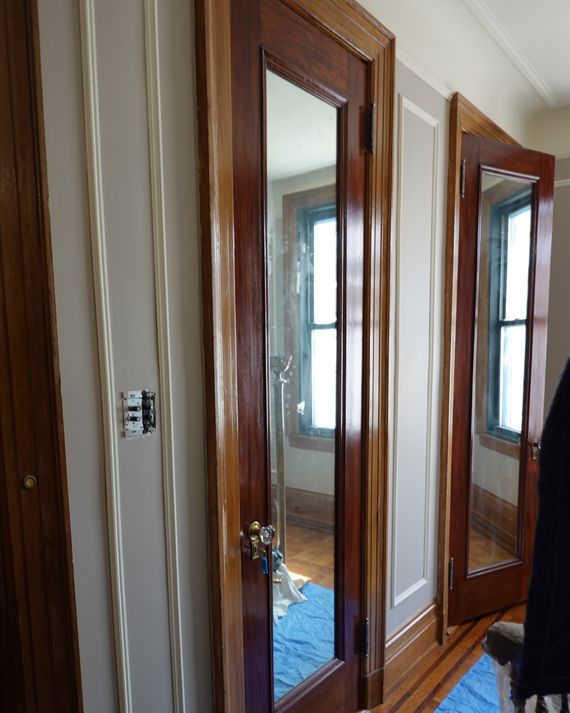
A second, larger bedroom, presumably for children, has two closets.
Photo: Adriane Quinlan
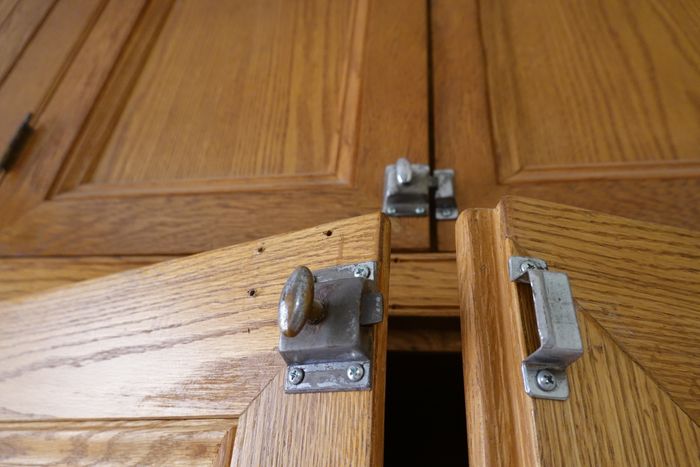
A smaller bedroom off the kitchen, designed for use by a maid, features a wall of built-in linen cabinets with antique hardware.
Photo: Adriane Quinlan
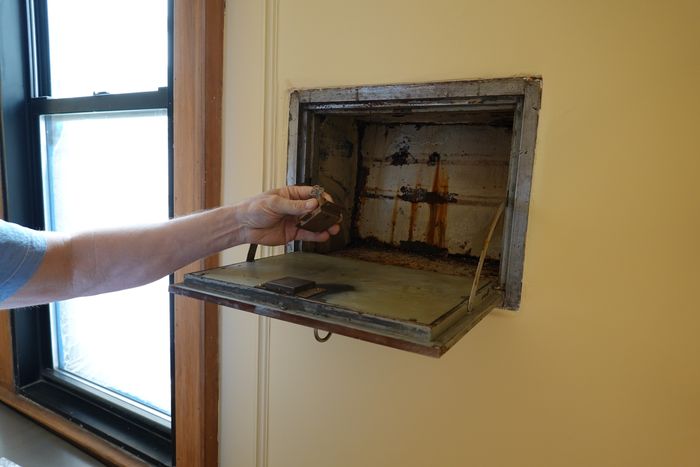
A restored safe in the primary bedroom.
Photo: Adriane Quinlan
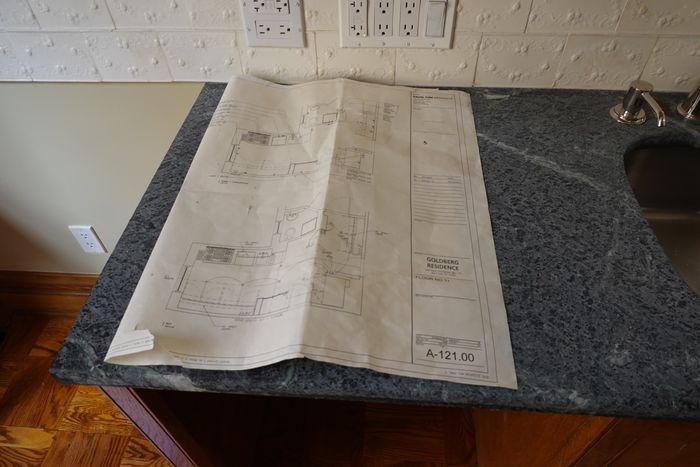
Gifford found a set of plans for the restoration by architect David Yum, now the director of architecture and preservation at the Prospect Park Alliance.
Photo: Adriane Quinlan
Sign Up for the Curbed Newsletter
A daily mix of stories about cities, city life, and our always evolving neighborhoods and skylines.
Vox Media, LLC Terms and Privacy Notice