


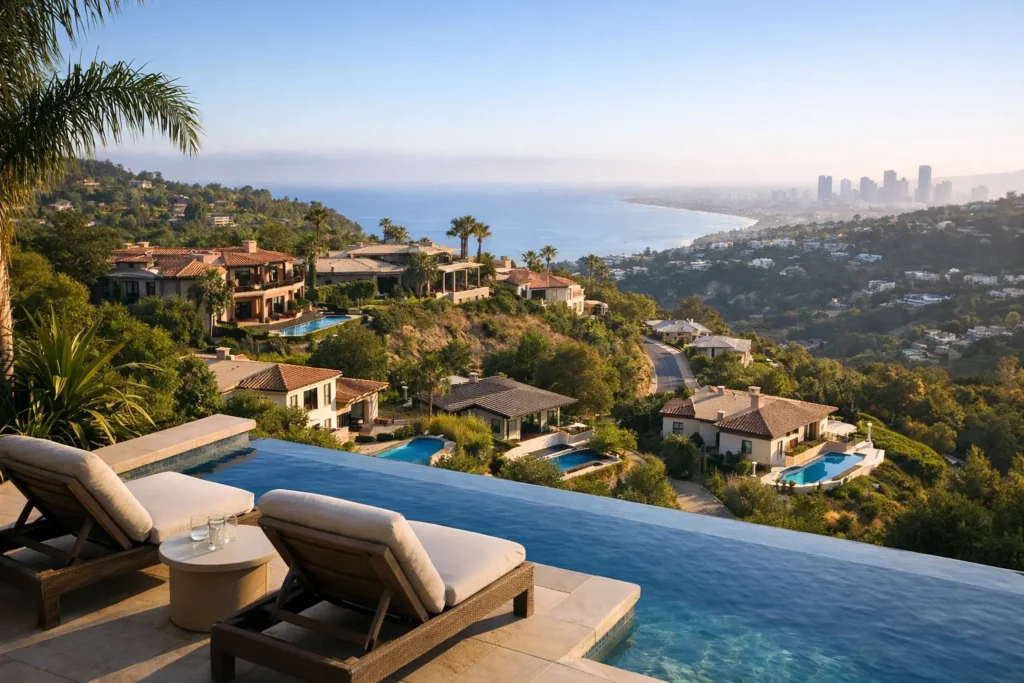
Some neighborhoods sell a home before a buyer even steps inside. The zip code, school district, view corridor, guard gate, or walkable village does a large share of the work. That is especially true when buyers start comparing luxury neighborhoods in California, where prestige means different things depending on whether they want oceanfront privacy, architectural pedigree, equestrian land, or a polished suburban lifestyle.
For buyers, the right neighborhood is not just about status. It is about fit, resale strength, and how daily life will actually feel after the move. For sellers, understanding where a neighborhood sits in the luxury market helps shape pricing, presentation, and negotiation strategy. California has no single definition of luxury. It changes by county, coastline, commute, and even block.
What defines luxury neighborhoods in California?
Luxury is often reduced to price per square foot, but experienced buyers know that value is more layered. In California, premium neighborhoods tend to combine several factors at once: limited inventory, strong demand from high-income buyers, recognizable prestige, lifestyle access, and a history of holding value through market shifts.
Some areas command top pricing because they are physically irreplaceable. Think bluff-top lots, panoramic ocean views, or estates tucked behind gates with meaningful land. Others earn their position because they offer a rare balance of privacy and convenience. A home can feel secluded while still placing you close to top schools, dining, business centers, or private clubs.
There is also a branding effect. Certain neighborhoods carry a name that resonates far beyond the local market. That matters more than many people expect. A recognizable neighborhood can widen the buyer pool, support stronger marketing, and create resilience when conditions become more selective.
12 luxury neighborhoods in California buyers watch closely
Beverly Hills
Beverly Hills remains one of the most recognizable luxury addresses in the country. Buyers are drawn to its legacy appeal, estate inventory, world-famous retail, and central position within Los Angeles. The market ranges from elegant historic homes to newly built contemporary properties with every high-end feature expected at this price point.
The trade-off is obvious. Prestige comes at a premium, and buyers often pay as much for location and cachet as for the structure itself. Still, for those who want a globally recognized address with enduring demand, Beverly Hills continues to set the standard.
Bel Air
Bel Air offers a different kind of luxury. It is quieter, more tucked away, and defined by large lots, private drives, and hillside estates. Many buyers prefer Bel Air because it feels removed from the city while still keeping major parts of Los Angeles within reach.
This neighborhood tends to appeal to buyers who prioritize discretion. The setting is dramatic, but convenience can vary by section, especially in canyon and hillside locations where access and lot usability differ more than expected.
Holmby Hills
Holmby Hills is often mentioned alongside Beverly Hills and Bel Air, but it has its own profile. Inventory is limited, estates are substantial, and the neighborhood carries an old-guard sense of exclusivity. Buyers looking here are usually not searching for trend. They want permanence, privacy, and a market with exceptional scarcity.
That scarcity is part of the appeal, but it also means fewer opportunities and less flexibility. If a buyer is highly specific about style or lot characteristics, patience matters.
Newport Coast
In Orange County, Newport Coast stands out for its gated communities, ocean views, newer luxury construction, and highly polished residential feel. It appeals to buyers who want a strong lifestyle package – coastal access, resort proximity, manicured surroundings, and homes built for modern entertaining.
For many affluent buyers, Newport Coast strikes a sweet spot between exclusivity and ease. The neighborhood is less about urban energy and more about controlled, elevated living. HOA structure and community rules can be a plus or a drawback depending on the buyer.
Corona del Mar
Corona del Mar offers a more intimate coastal luxury experience. It combines walkability, village charm, and premium real estate near beaches, shops, and dining. Compared with some larger estate enclaves, it can feel more connected and more social.
That said, lot sizes are often smaller, and pricing can be aggressive because demand stays strong. Buyers are choosing lifestyle density here, not sprawling seclusion.
Laguna Beach
Laguna Beach has a creative, high-end coastal identity that is hard to replicate. Buyers come for the views, the artistic culture, the beach access, and the sense that every pocket has a different personality. Luxury inventory ranges from hillside contemporary homes to oceanfront properties and private estates in gated communities.
The appeal is powerful, but terrain matters. Street access, parking, stairs, and lot configuration can shape everyday livability more than a listing first suggests. In Laguna, two homes at similar price points can offer very different experiences.
Rancho Santa Fe
Rancho Santa Fe remains one of Southern California’s strongest answers to estate-style luxury. Large parcels, equestrian properties, golf access, gated sections, and a more private inland setting make it especially attractive to buyers who want space without giving up quality.
This is not coastal lock-and-leave living. It is a market built around land, privacy, and a more residential rhythm. For families, executives, and buyers moving up from tighter coastal footprints, Rancho Santa Fe often delivers a sense of long-term value that goes beyond square footage.
La Jolla
La Jolla blends coastal beauty with academic influence, established wealth, and architectural variety. The market includes everything from bluff-front trophy homes to village residences and gated compounds in elevated enclaves. Buyers are often drawn by the views, the prestige, and the unique balance of natural beauty and refined daily living.
It is also a neighborhood where micro-location matters a great deal. One section may be prized for walkability, another for privacy, and another for panoramic ocean outlooks. Buyers need to define their priorities early because La Jolla is not one market in practice.
Del Mar
Del Mar offers a smaller-scale, highly desirable coastal market with strong lifestyle appeal. The village atmosphere, race season energy, ocean views, and limited supply keep demand elevated. Buyers who want coastal luxury without the scale of larger city markets often focus here.
The challenge is availability. Del Mar is selective by nature, and homes that are well positioned can move quickly. For sellers, that scarcity can be a meaningful advantage when pricing and presentation are aligned correctly.
Atherton
Atherton is one of the most exclusive residential markets in Northern California. Known for expansive estates, tree-lined privacy, and proximity to Silicon Valley, it attracts buyers who want discretion, land, and easy access to major business hubs.
Its luxury profile is less lifestyle-forward in the resort sense and more centered on wealth concentration and private residential quality. Buyers seeking nightlife or a visible social scene may prefer other markets, but for pure prestige and estate value, Atherton is in rare company.
Palo Alto’s Old Palo Alto and Crescent Park
For buyers who want luxury tied closely to top schools, intellectual capital, and long-term demand fundamentals, select neighborhoods in Palo Alto stand out. Old Palo Alto and Crescent Park are especially notable for their tree-lined streets, distinguished homes, and proximity to major tech and academic centers.
The competition here is often intense because the buyer pool is both financially strong and highly informed. In these neighborhoods, quality of lot, remodeling standard, and school alignment can influence value quickly.
Pacific Heights, San Francisco
Pacific Heights remains one of San Francisco’s most established luxury neighborhoods. Its historic homes, bay views, and classic architecture appeal to buyers who value legacy properties and one of the city’s most prestigious residential settings.
Urban luxury comes with a different set of calculations than suburban or coastal estate living. Walkability and culture may be stronger, while parking, density, and lot size may be weaker. For the right buyer, that trade is worth it.
How buyers should evaluate California luxury neighborhoods
The smartest luxury buyers do not start with aesthetics alone. They start by asking what kind of life they want the home to support over the next five to ten years. A beachfront house may sound ideal until travel frequency, maintenance expectations, and privacy needs enter the picture. A gated inland estate may offer more space and control, but feel too removed if daily coastal access matters.
Resale should also stay part of the conversation, even for buyers planning a long hold. Neighborhoods with broad appeal, tight inventory, and strong identity tend to be more forgiving in softer cycles. Ultra-specific properties can still perform well, but they often require the right buyer at the right time.
It also helps to think beyond county lines. A buyer considering Newport Coast, La Jolla, and Rancho Santa Fe is not shopping three interchangeable options. They are choosing among different versions of luxury. One favors ocean-view community living, another blends village and coastline, and another prioritizes land and privacy. The best decision comes from clarity, not just budget.
Why neighborhood positioning matters for sellers
For homeowners preparing to sell in luxury neighborhoods in California, neighborhood identity shapes every part of the strategy. Pricing is not only based on comps. It is based on how buyers perceive the community, what nearby listings are signaling, and whether the home reflects the expectations of that specific market.
A well-located home in a known luxury enclave can outperform a larger property in a less established area if the marketing tells the right story. Buyers at this level respond to presentation, but they also respond to confidence. They want to understand why this neighborhood, why this street, and why this property deserves attention now.
That is where local market fluency matters. In Southern California especially, adjacent neighborhoods can produce very different buyer behavior. At Handel Homes, that kind of positioning is not treated as a detail. It is part of how sellers protect value and how buyers move with more certainty.
California luxury real estate is not one market, and that is exactly what makes it compelling. The right neighborhood is the one that supports your lifestyle today and still makes sense when the market changes tomorrow.